
"defect standards"
2000 article(s) found
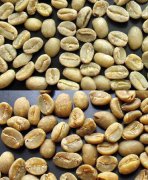
Grading of raw coffee beans
There are two ways to classify raw coffee beans, one is the filter number, and the other is the elevation. It is divided by the filter number, and the size is size in terms of the screen size. Round beans are generally smaller than flat beans, between 8-13 and 12-29. 8, 9, 10. 12, 13. 18. 29 = small, medium, ordinary. Quasi-big. Big, extra large. The bigger the size, the bigger the beans. Like SC-.

How do you measure coffee cups? Coffee cup test method tutorial that can be done at home
Professional coffee knowledge exchange More coffee bean information Please pay attention to coffee workshop (Weixin Official Accounts cafe_style) Why is the coffee grinding standard measured by cup so important? How much is the standard cup grind? Who determines the flavor of coffee on the market? Coffee lovers, can you smell the origin of this coffee? Following the steps of the cup test in the previous article, today we will introduce the scoring items of the cup test.

Introduction to the method of Grinding and Calibration of Cuban Crystal Mountain Coffee beans with excellent balance
Cubita adheres to the principle of perfect coffee, only makes individual coffee, the picking of coffee beans is done by hand, and all the particles of coffee beans are strictly selected according to the standard of sieve 17-19, plus washing coffee beans, to a large extent, remove defective beans and other impurities to ensure the quality of coffee. It has a high reputation in the coffee industry. Careful people will find that Cubita has a relationship with other people
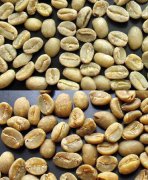
Classification of raw coffee beans in Coffee Encyclopedia
There are two ways to classify raw coffee beans, one is the filter number, and the other is the elevation. It is divided by the filter number, and the size is size in terms of the screen size. Round beans are generally smaller than flat beans, between 8-13 and 12-29. 8, 9, 10. 12, 13. 18. 29 = small, medium, ordinary. Quasi-big. Big, extra large. The bigger the size, the bigger the beans. Like SC-.
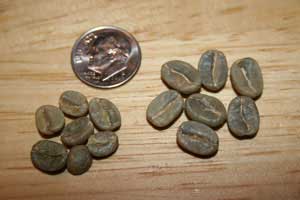
Knowledge points of Coffee Raw Bean: the concept of Fine Coffee Specialty Coffee (1)
The traditional classification of coffee beans is usually based on the classification criteria defined by the coffee producing countries, and then agreed to become common in the international market and traded under such a tacit understanding. For a long time, coffee producing countries have their own classification and evaluation criteria for coffee, which serve as the pricing guidelines in the coffee market. But slowly in recent years, coffee consuming countries have begun to demand unified evaluation criteria.

Introduction to the Flavor description treatment method of Indonesian Coffee Raw Bean grading Standard
The standard for flavor description of raw coffee beans in Indonesia the size of the international practice is 9: 22, and the number used represents the diameter of the screen, with this number as the numerator and 64 as the denominator, in inches. For example, 14 refers to raw coffee beans that can be sifted through a 14-inch screen with a diameter of 64 inches, and 19 + refers to coffee that can be sifted with a diameter of more than 64 inches with a 19-inch screen.
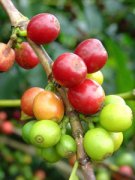
Interpretation of Fine Coffee with Common acronyms for Coffee and Raw Bean
Pay attention to the raw bean information, in addition to the clear name of the country and region, there are often many acronyms inside the label. When you meet for the first time, you often don't know what to say: DP: Dry Process, dry EP: European Preparation, European standard. It is common in Central and South America. It means that, on the basis of the classification of raw beans, in order to meet the special needs of some European raw bean merchants

General knowledge of fine coffee beans grading of raw coffee beans
There are two ways to classify raw coffee beans, one is the filter number, and the other is the elevation. It is divided by the filter number, and the size is size in terms of the screen size. Round beans are generally smaller than flat beans, between 8-13 and 12-29. 8, 9, 10. 12, 13. 18. 29 = small, medium, ordinary. Quasi-big. Big, extra large. The bigger the size, the bigger the beans. Like SC-.

Italian coffee extraction common sense time standard matters needing attention powder quantity
Before entering the common extraction defects, I will briefly talk about how to correctly prepare the coffee to be extracted. Basically based on the skills mentioned in his article Espresso Packing Techniques: Update 2004 by the owner of David Schomer,Vivance, an influential barista trainer. Online
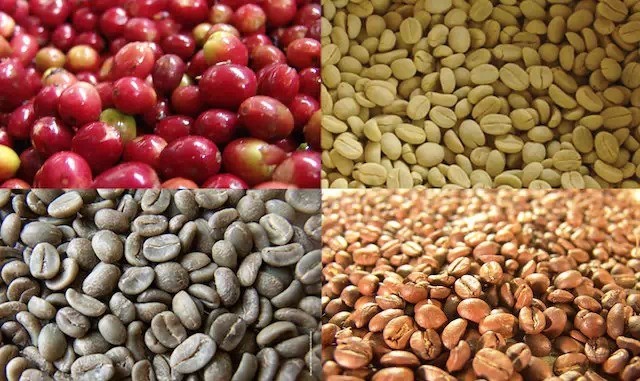
Raw Bean Label: Interpretation of Common Abbreviations in English
Pay attention to the raw bean information. In addition to the country and region name at a glance, the label often contains many abbreviations. When you first meet, you often don't know what to say: DP: Dry Process, EP: European Preparation, European Standard. It is common in South America. In order to meet the special requirements of some European green bean merchants, on the basis of the classification of green beans
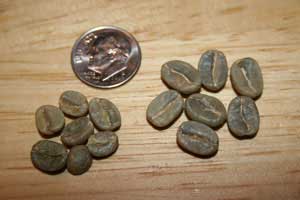
The concept of Fine Coffee Specialty Coffee (1) the third Wave of Coffee Culture and History in the World
The traditional classification of coffee beans is usually based on the classification criteria defined by the coffee producing countries, and then agreed to become common in the international market and traded under such a tacit understanding. For a long time, coffee producing countries have their own classification and evaluation criteria for coffee, which serve as the pricing guidelines in the coffee market. But slowly in recent years, coffee consuming countries have begun to demand unified evaluation criteria.

Coffee cup test eight scoring items the correct coffee cup test method should be scored like this
Professional coffee knowledge exchange more coffee bean information please follow the coffee workshop (Wechat official account cafe_style) cup coffee grindability standard why is it so important? What is the grinding degree of the standard cup? The first scoring item: cleanliness (Clean cup) cleanliness is a very important and necessary condition for high-quality products, and cleanliness is free from defects and defective taste (

How to distinguish between primary defective beans and secondary defective beans? how to select the baked defective beans?
Professional coffee knowledge exchange more coffee bean information please pay attention to the coffee workshop (Wechat official account cafe_style) 1, major defects / first-level defects (Category 1) first-level defects (Category 1) in the CQI quality coffee raw bean evaluation criteria must not appear. It will seriously and continuously damage the raw bean quality of normal coffee, deteriorate the flavor of coffee, and produce coffee.
Skills and feelings of Q Test Cup tester Certification examination Professional Coffee Coffee Association
About test preparation and test feeling ①, let's first talk about Wen Xiang bottle, which is a relatively well-prepared subject in the process of preparing for all examination subjects. Coffee nose 36 flavor, is divided into four groups: enzymatic reaction, caramel reaction, distillation reaction and aroma pollution, each 9 bottles. When I was practicing, I found out each of the nine bottles, remembered what they smelled, and then smelled them over and over again.

Introduction to the treatment of water-washed honey of coffee beans with fruit pulp in the sun
There are two methods for selecting defective coffee beans: manual selection and mechanical selection. Manual selection is an assembly line, in which several workers sit on a transmission belt about 1 meter wide to pick out defective beans, and some strict farms will manually select them many times until no defective beans are seen. The rule of mechanical selection is to identify by computer, and to remove defective beans and grade them is to divide coffee beans into different categories according to the standard.
There are two methods for grading raw coffee beans in terms of sieve size, size
There are two ways to classify raw coffee beans, one is the filter number, and the other is the elevation. It is divided by the filter number, and the size is size in terms of the screen size. Round beans are generally smaller than flat beans, between 8-13 and 12-29. 8, 9, 10. 12, 13. 18. 29 = small, medium, ordinary. Quasi-big. Big, extra large. The bigger the size, the bigger the beans. Like SC-.
Description of Grinding scale Flavor of Coffee beans in Cuba
Cubita is Cuban coffee, which is mainly exported to Japan, France, Germany, Ireland, Canada and other countries. The cubita coffee entering the Chinese market is all selected from the pollution-free Crystal Mountain coffee beans in the high altitude areas of Cuba, which is a typical Caribbean coffee bean. All the granules of coffee beans are strictly selected according to the standard of sieve 17-19, and the selected coffee beans have large particles and high maturity.
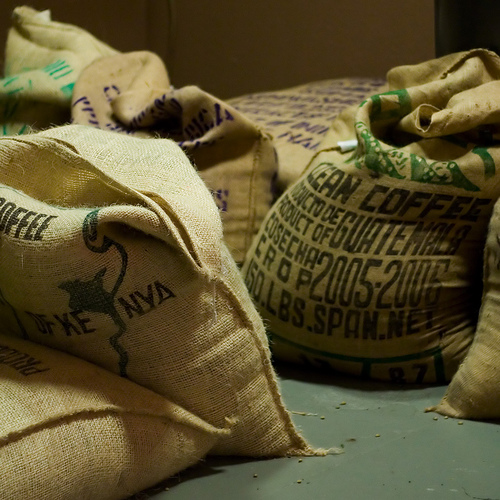
Detailed explanation of coffee raw bean label interpretation of common acronyms
Pay attention to raw bean information, in addition to the clear name of the country and region, the label often has a lot of acronyms inside, for the first time, I often don't know what to say: DP:Dry Process, dry EP:European Preparation, European standard. It is common in Central and South America. It means that on the basis of the classification of raw beans, in order to meet the special requirements of some European raw bean merchants.
Quality Evaluation of Coffee Raw Bean
Each coffee producing country has its own grading method and quality evaluation standard. It can be roughly divided into the following categories: 1. The quality of high real estate coffee is better than that of low real estate in Central American countries. The altitude is about high, and the lower the relative temperature, the coffee fruit can take time to ripen. Fully ripe beans have good expansibility and are easy to bake. 2. Evaluation by sieve net

Ethiopian Sidama G1 Coffee Bean Grades
Ethiopian sidamo G1 grade of coffee beans washed sidamo green beans are pale green, citrus notes are evident on the palate with a hint of berry fruit, and pleasant elegant sour, grape sweet and chocolate aftertaste washed coffee flavor less wild flavor, with a clean, refreshing character, suitable for City to Full City roasting degree; some excellent in nature